
pet health certificate 2025
Traveling internationally with your pet requires more than just booking tickets and packing treats. One of the most critical documents you’ll need is a Pet Travel Health Certificate — an official statement confirming your pet is healthy and meets the entry requirements of your destination country. Without this document, your furry companion may be denied boarding, quarantined upon arrival, or sent back home.

In this comprehensive 2025 guide, you’ll learn how to get a pet health certificate, the requirements, timelines, and expert tips to make your travel stress-free.
🐾 What Is a Pet Health Certificate?
A Pet Health Certificate — alternatively an International Health Certificate or Certificate of Veterinary Inspection (CVI — is a stamped document signed by a licensed vet. It verifies that your pet:
- Is fit and healthy to travel.
- Has received all vaccinations required (rabies, etc.).
- Complies with the receiving country’s requirements for health and documentation.
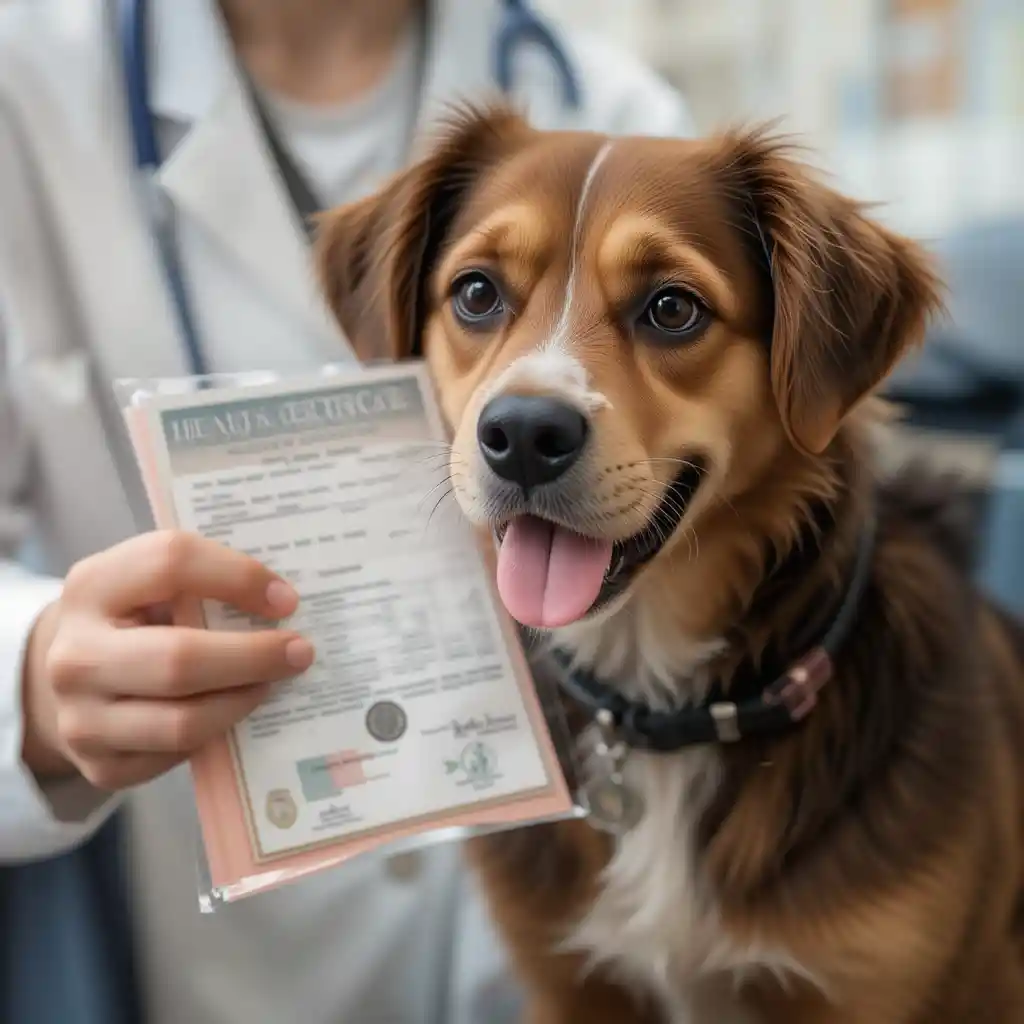
This certificate is normally required for overseas as well as interstate travel and must be produced within a specified timeframe before departure (typically 10 days or less).
✈️ When Do You Need a Pet Health Certificate?
You’ll need a pet health certificate if:
- You’re traveling internationally (required by almost all countries).
- You’re traveling domestically on certain airlines.
- You’re traveling to another state with special animal transport stipulations.
- You’re entering or exiting countries with rabies-free status (e.g., Australia, New Zealand, Japan).

Note: Each country has various requirements. Always check with your airline and also the official government website of the destination country.
📝 Step-by-Step: How to Get a Pet Health Certificate in 2025
Step 1: Schedule a Vet Appointment (Early!)
Schedule an appointment with a USDA-licensed veterinarian no later than 30–45 days prior to departure. Some vaccinations (e.g., rabies) must be given at least 21 days before departure so that they have time to become effective.
Many countries require proof of rabies vaccination and other region-specific shots. For a full breakdown, check our guide on Pet Travel Vaccines for International Trips.
Tip: Use this official USDA locator tool to find an accredited vet.
Step 2: Ensure Vaccines Are Up to Date
At the time of visit, your vet will:
- Inspect your pet’s general health.
- Update and administer necessary vaccines (e.g., rabies, distemper, parvovirus).
- Administer additional vaccines if your destination requires (e.g., tapeworm treatment for travel to the UK).
Have records of vaccine certificates and microchip registration numbers with you. Vaccines for rabies usually need to be administered at least 21–30 days prior to travel.
Step 3: Complete the Country-Specific Forms
Each nation has a variation. For example:
- EU countries require the EU Health Certificate (Annex IV).
- Australia and Japan require pre-approval and long forms.
- Canada and Mexico can use simpler veterinary forms.
You must complete the correct version for your country of destination. Your USDA-accredited veterinarian will complete the English version and, if required, the translated version.
Pro tip: Visit the APHIS Pet Travel Site to download the correct form based on your destination.
Step 4: Endorsement by USDA (When Required)
Some countries require your completed certificate to be stamped by the USDA Animal and Plant Health Inspection Service (APHIS).
You can send your forms in two ways:
- Online using VEHCS (Veterinary Export Health Certification System) — faster and recommended.
- By postal service — takes longer, so plan ahead.

Cost of Endorsement (2025):
About $38–$173 USD, depending on the animals’ number and complexity.
Step 5: Receive the Official Certificate & Prepare for Travel
After you’ve signed it, your certificate is valid for 10–30 days, depending on the country. You’ll have a hard copy (and sometimes a digital copy). Be sure to:
- Have the original health certificate with you.
- Bring vaccination records and microchip papers.
- Store duplicate digital copies on your phone or cloud storage.
📅 Timeline Summary (Example for International Travel)
| Days Before Travel | Task |
|---|---|
| 30–45 days | Schedule vet appointment |
| 21+ days | Ensure rabies vaccine is up to date |
| 10–14 days | Vet fills out health certificate |
| 7–10 days | Submit to USDA (online or by mail) |
| 1–2 days | Receive certificate and prepare documents |
🐶 Which Pets Need a Health Certificate?
Most commonly:
- Dogs and Cats (almost always required).
- Birds, Rabbits, Ferrets, and Exotic Pets (check country rules).
- Service Animals and Emotional Support Animals (not exempt from health checks).
🌍 Country-Specific Requirements (Examples)
| Country | Key Requirements |
|---|---|
| UK | Rabies vaccine, tapeworm treatment, microchip, EU health certificate |
| Australia | Import permit, rabies titer test, 180-day waiting period |
| Japan | Microchip, 2 rabies vaccines, FAVN titer, advance notification |
| Canada | Rabies certificate, no USDA endorsement needed |
| Mexico | Rabies and deworming certificate, vet-signed health certificate |
🧾 Costs Involved
| Service | Estimated Cost (USD) |
|---|---|
| Vet Visit | $50 – $150 |
| Vaccinations (if needed) | $20 – $80 per shot |
| USDA Endorsement (if required) | $38 – $173 |
| Microchipping | $25 – $75 |
| Rabies Titer Test | $100 – $200 |
🚫 Common Mistakes to Avoid
- Employing a non-accredited vet — only USDA-accredited vets can grant valid international health certificates.
- Not meeting deadlines — certificates have precise time limits (typically 10 days).
- Mistakes with forms — filling in a standard health certificate as opposed to the correct country form can invalidate your papers.
- Forgotten microchip registration — most countries require microchipping before rabies shot.
- Not considering airline regulations — some airlines incorporate personal health mandates alongside government mandated ones.

💼 Final Checklist Before You Fly
- ✅ Pet is microchipped and registered
- ✅ Rabies and required vaccines are up to date
- ✅ Country-specific health certificate completed
- ✅ USDA endorsement (if needed) completed
- ✅ Documents stored physically and digitally
- ✅ Airline requirements reviewed
✈️ Can You Use the Same Certificate for Return Travel?
Not usually. Health certificates are valid for a single entry and expire quickly. For your return trip:
- You may need to repeat the process abroad with a local licensed vet.
- Some countries offer “Pet Passports” (e.g., EU Pet Passport) that simplify re-entry.

👩⚕️ Expert Quote
“A health certificate is your pet’s boarding pass for international travel. Without it, even a perfectly healthy pet can be denied entry or quarantined for weeks.”
— Dr. Michelle Smith, DVM, USDA-Accredited Veterinarian
🧠 Conclusion: Stay Ahead in 2025
Getting a pet health certificate in 2025 is part of the international travel planning process. While the documentation and rules can be overwhelming, proper planning ensures your trip goes according to plan — and safeguards your pet and keeps it in good standing.
Plan ahead, visit an accredited veterinarian, and comply with your destination’s policies to the letter. It’s well worth the effort to enjoy your travels together without nightmarish surprises.
What is a pet travel health certificate?
A pet travel health certificate is an official signed document from a USDA-credentialed veterinarian confirming your pet is healthy, vaccinated, and eligible for entry to your country of destination.
How do I get a pet health certificate for international travel?
You must visit a USDA-licensed veterinarian, get all the shots updated, complete country-specific documentation, and obtain USDA approval if required — all within the timeframe before departure.
How long is a pet health certificate valid?
Most pet health certificates for overseas travel are 10 days from the date issued, but a few nations allow 30 days. Always check your destination’s official requirements.
Does the USDA need to stamp my pet health certificate?
Yes, for most countries abroad, the signed certificate must be stamped by the USDA APHIS using their VEHCS system or mailed.
How much is a pet travel health certificate in 2025?
Prices range from $50 to $300+ depending on vet fees, vaccinations required, USDA stamping charges, and destination requirements.